
Fetal Circulation
How does the fetal circulatory system work?
During pregnancy, the fetal circulatory system works differently than after birth:
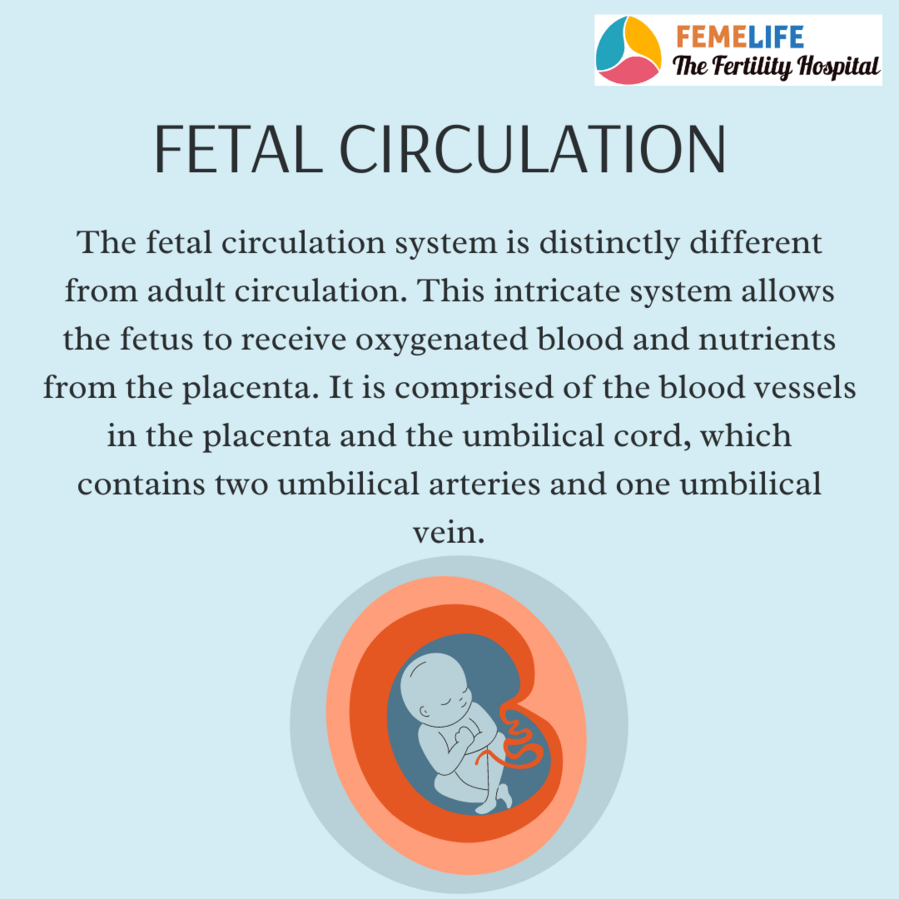
- The umbilical cord connects the fetus to the placenta. During pregnancy, this is the organ that develops and implants in the mother’s uterus.
- The fetus receives all of its nutrients and oxygen from the umbilical cord’s blood vessels. Through the placenta, the fetus receives life support from the mother.
- Waste products and carbon dioxide from the fetus are eliminated from the mother’s circulation via the umbilical cord and placenta.
Three shunts are used in the fetal circulatory system. These are tiny passageways that direct oxygenated blood. These shunts are designed to bypass the lungs and liver. This is due to the fact that these organs will not function fully until after delivery. The foramen ovale is the name given to the shunt that bypasses the lungs. This shunt transports blood from the right atrium to the left atrium of the heart. The ductus arteriosus is a blood vessel that connects the pulmonary artery to the aorta.
Inside the fetal heart
- Blood flows into the right atrium. This chamber is located on the upper right side of the heart. The majority of the blood that enters the right atrium goes through the foramen ovale into the left atrium.
- The blood subsequently enters the left ventricle. This is the heart’s bottom chamber. The blood then travels to the aorta. This is the main artery that leads from the heart.
- The blood subsequently enters the left ventricle. This is the heart’s bottom chamber. The blood then travels to the aorta. This is the main artery that leads from the heart.
- Blood is delivered from the aorta to the heart muscle, as well as the brain and arms. The blood then circulates back to the right atrium of the heart via the superior vena cava.
- The right ventricle pumps less oxygenated blood into the pulmonary artery. A limited amount of blood is carried on to the lungs. The majority of this blood is sent to the descending aorta via the ductus arteriosus.