
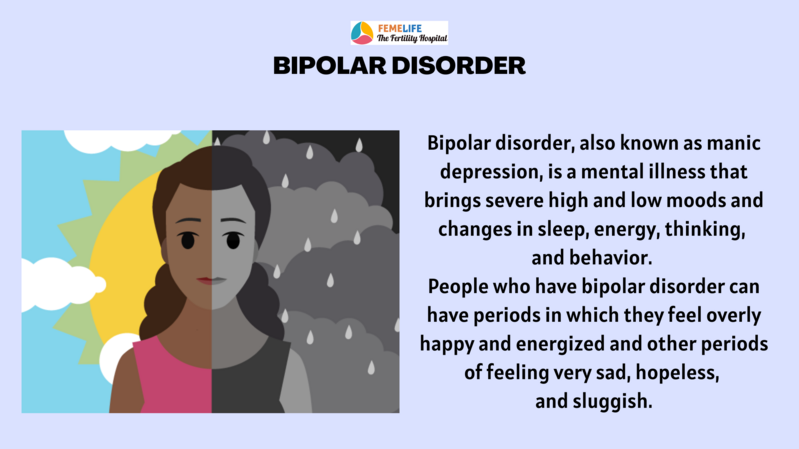
What is bipolar disorder?
Manic depressive disease, also referred to as bipolar disorder or manic depression, is a chronic mood disorder and mental health condition that produces abrupt changes in mood, energy levels, thought processes, and behavior. These shifts interfere with your ability to complete daily duties and can persist for a few minutes or several days, weeks, or even months
There are a few different varieties of bipolar illness, which are characterised by severe mood swings known as hypomanic/manic and depressed episodes. Bipolar disorder sufferers don’t always experience hypomania, manic episodes, or depression episodes. Euthymia, or periods of normal mood, are also experienced by them.
Manic episodes
Mania is a disorder in which you experience dramatic changes in your emotions, thoughts, energy, talkativeness, and activity level. You also experience a period of excessively elevated or irritable mood. Others will note the shift in your regular behavior and high level of vigour in your physical and mental activity.
Depressive episodes
Different signs of depression, including: Low or depressed mood, loss of interest in most activities, and many more, during a depressive episode.
- Tiredness.
- alterations in appetite.
- despondency and feelings of unworthiness.
Who does bipolar disorder affect?
Anyone can be impacted by bipolar disorder. The usual age of onset is 25, although it sporadically might occur as young as infancy or as old as your 40s or 50s.
Despite the fact that bipolar disorder affects both AFABs (those designated female at birth) and AMABs (people assigned male at birth), it tends to impact them differently.