
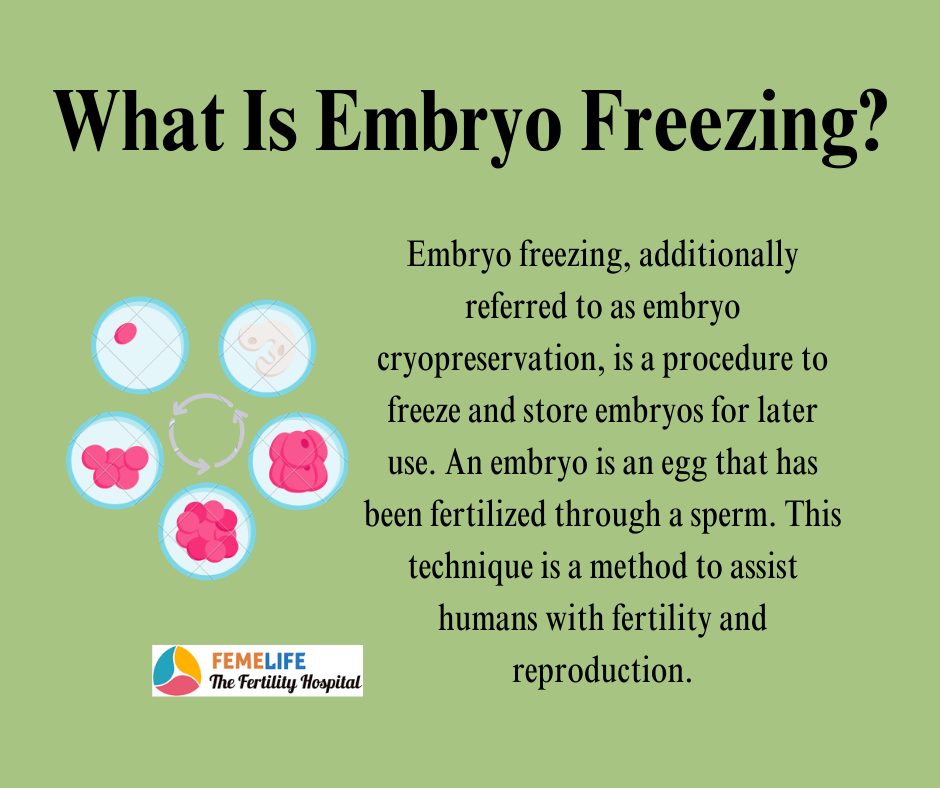
Embryo freezing
The procedure of Embryo freezing is done along with fertility treatment in an IVF laboratory. It allows people to store gametes, reproductive tissue, and embryos for later use.
The first successful pregnancy resulting from stored healthy embryos took place in the 1980s. Since then, many people have frozen embryos and used them later. If your doctor has given this option, you must know the risks and advantages.
This is a laboratory procedure that begins with the injection of hormones and other medications to stimulate the production of potentially fertile eggs. The eggs are then extracted from the ovaries, either for fertilizing in a lab or for freezing. A person may wish to freeze their eggs. Or, they may wish to use them at once to become pregnant.
Fertilization of eggs with sperm can be achieved either with in vitro fertilization (IVF) or intracytoplasmic sperm injection (ICSI). Often with in vitro fertilization (IVF) or Intracytoplasmic sperm injection (ICSI) treatment, there may be good quality embryos left over after embryo transfer.
Instead of discarding them, there is the option to freeze them to use in the future. A person can also freeze eggs and sperm, which are not fertilized. Embryos can be frozen to preserve fertility so it may be possible to have a baby at a later date.