
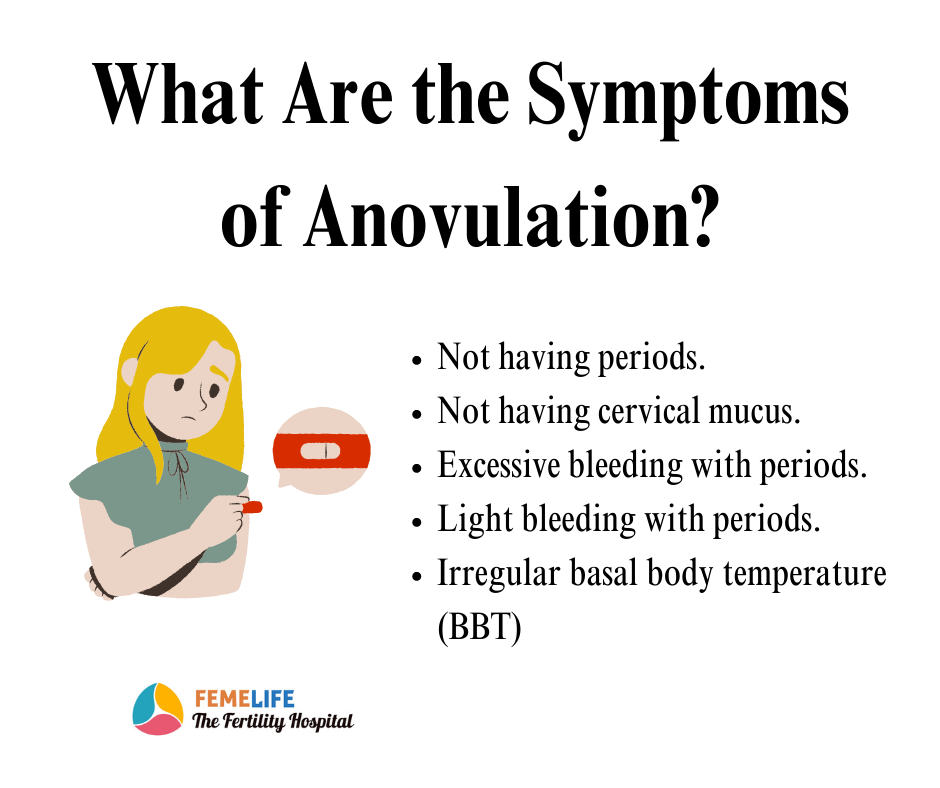
Symptoms of anovulation
Knowing the general indicators of ovulation and tracking your monthly cycles might help you detect signs and symptoms of anovulation. It’s crucial to note that just because you get a period doesn’t indicate you’ve ovulated. Anovulation can cause the following signs and symptoms:
- Having irregular periods: An irregular period occurs when the length of time between your periods changes. The usual menstrual cycle lasts 28 days, however it might be a few days shorter or longer.
- Having very heavy or light periods: A heavy period is described as losing more than 16 teaspoons (80 mL) of blood throughout your period and/or having a period that lasts more than seven days. A light menstruation is defined as blood loss of less than four teaspoons (20 mL) throughout your period.
- Having a lack of periods (amenorrhea): Anovulation can be identified by missing one or more periods without being pregnant.
- Having a lack of cervical mucus: Cervical mucus is the most common vaginal discharge that occurs just before and during ovulation. It frequently resembles raw egg whites. If you don’t experience this discharge, you could be suffering from anovulation.
- Having an irregular basal body temperature: Your basal body temperature is the temperature you have when you are completely relaxed. It is often taken shortly after waking up and before engaging in any form of physical action or activity. Your basal body temperature may rise somewhat as a result of ovulation.