
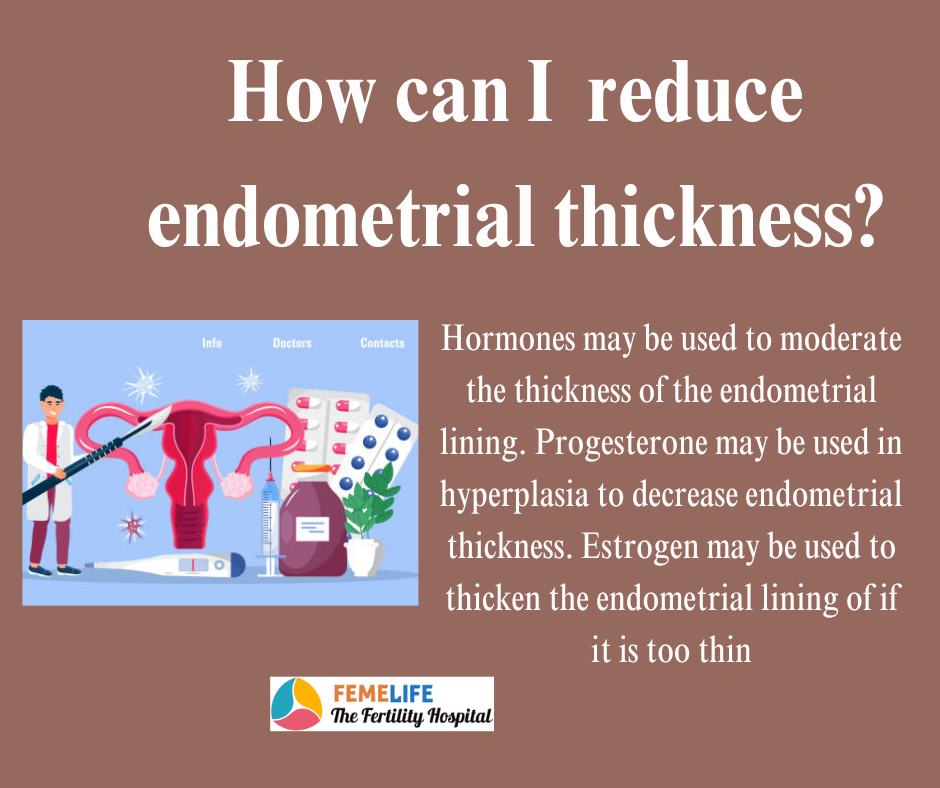
How is endometrial thickness managed?
The increased risk of cancer due to atypical endometrial hyperplasia, the healthcare provider may recommend a hysterectomy to remove the uterus. After a hysterectomy, there won’t be able to get pregnant. May peoples see symptoms improve with less invasive progestin treatments progestin comes in many forms:
- Oral progesterone therapy or progesterone hormone intrauterine device (IUD)
- Injections
Treatment:
Treatment most generally consists of hormone therapy or surgery.
The options will depend on a few factors, such as:
- If atypical cells are found
- If you have reached menopause
- Future pregnancy plans
- Personal and family history of cancer
If you have a simple hyperplasia, your doctor will suggest just keeping an eye on the situation. At times she may advise to go for any of these treatments:
Hormonally therapy:
Progestin, a synthetic form of progesterone is available in pill form and also as injection or intrauterine device.
Hysterectomy:
If you have atypical hyperplasia, removing uterus will lower the cancer risk. Having hysterectomy surgery means won’t be able to get pregnant after. It may be a good option if you have reached menopause.