
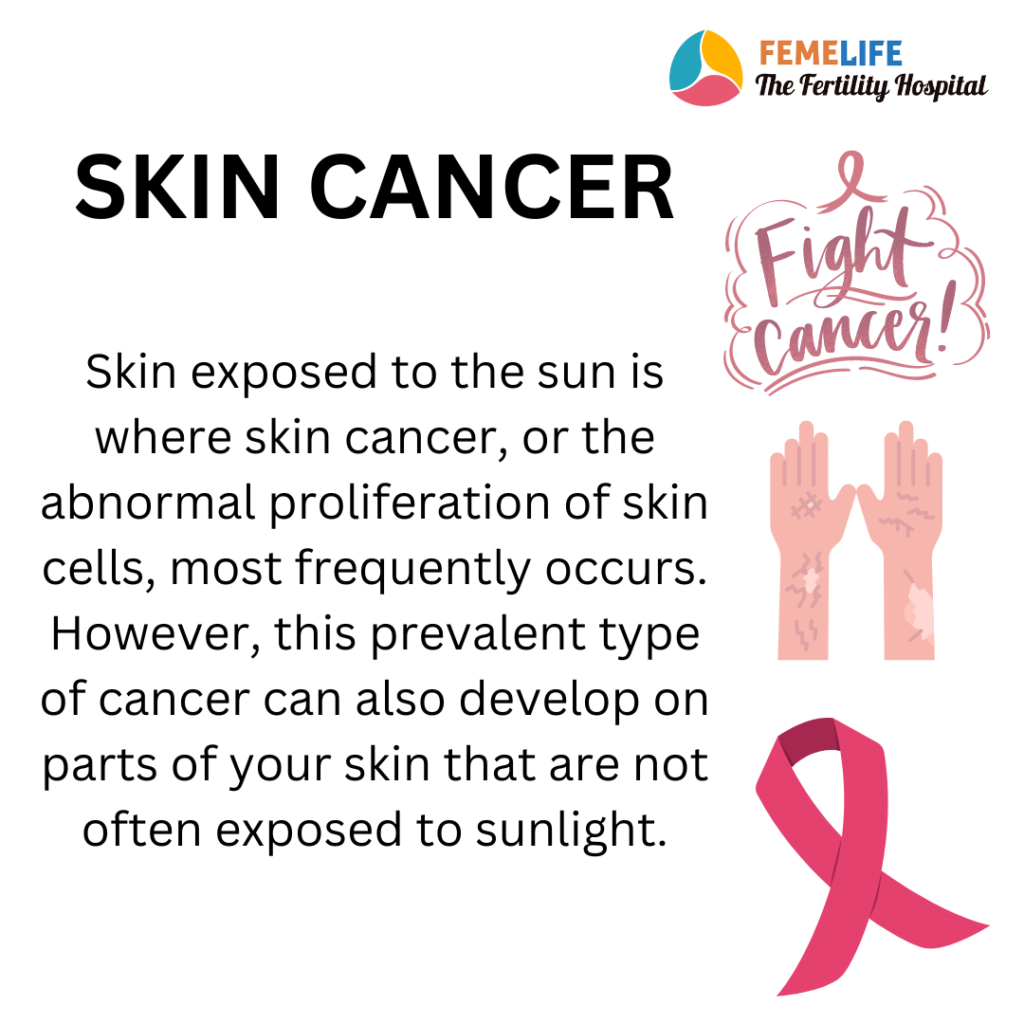
Skin cancer is a condition marked by the development of abnormal cells in the tissues of your skin. Normally, new skin cells form to replace old ones as they age and die. Cells multiply more quickly when this process isn’t functioning properly, such as when exposed to ultraviolet (UV) light from the sun. These cells could be benign, meaning they don’t spread or damage others. They might also be malignant. If skin cancer is not detected in its early stages, it may spread to surrounding tissue or other parts of your body. Fortunately, most cases of skin cancer are curable if discovered and treated in their early stages. Therefore, it’s crucial to consult your healthcare professional if you suspect you are exhibiting any skin cancer symptoms.
TYPES OF SKIN CANCER
The three primary kinds of skin cancer are as follows:
- Basal cell carcinoma is a skin cancer that develops in the basal cells of the lower epidermis (the skin’s outer layer).
- Squamous cell carcinoma is a skin condition that develops in the squamous cells of the epidermis.
- Melanoma is a cancer that develops in melanocytes. Melanin, a brown pigment that gives your skin its colour and shields you from some of the sun’s harmful UV rays, is produced by melanocytes. Because it has the potential to spread to other parts of your body, this type of skin cancer is the most dangerous.