
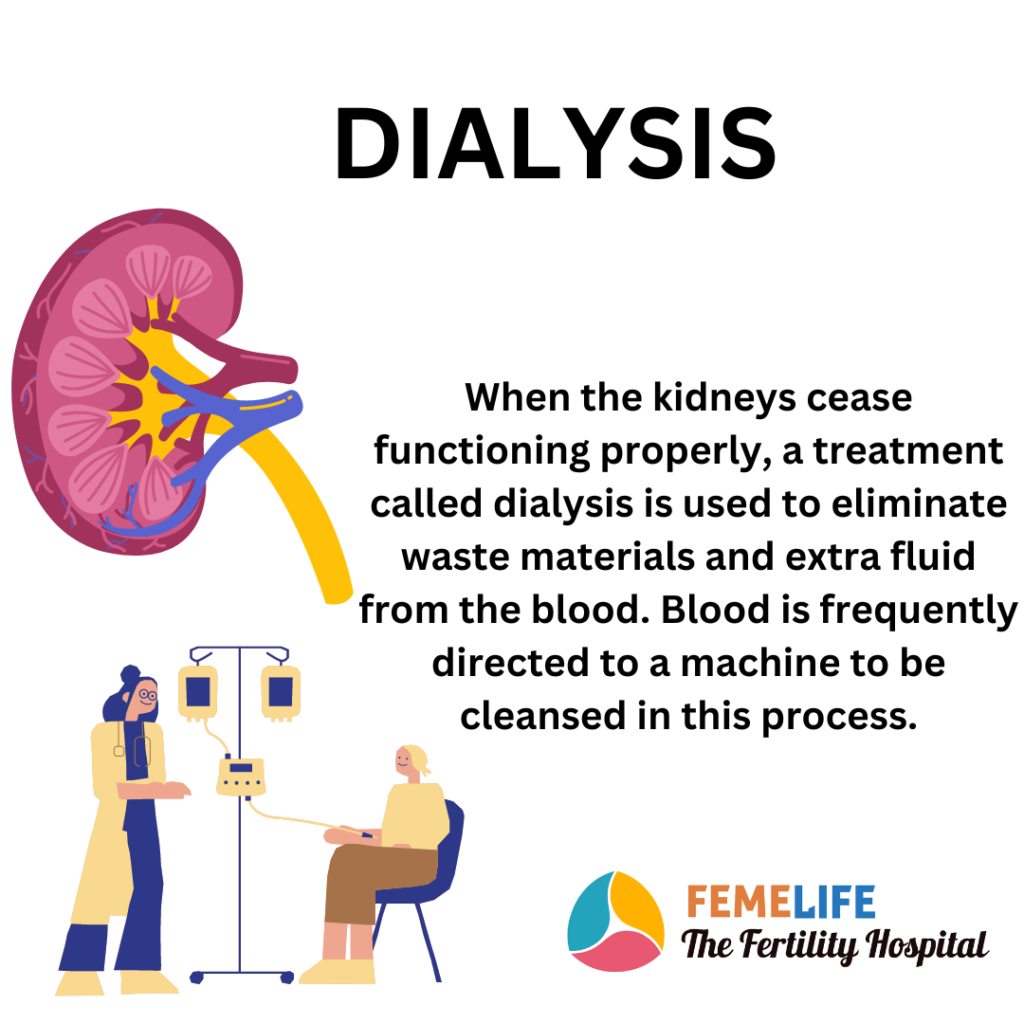
When the kidneys cease functioning properly, a treatment called dialysis is used to eliminate waste materials and extra fluid from the blood. Blood is frequently directed to a machine to be cleansed in this process. In a typical state, the kidneys filter the blood, eliminating dangerous wastes and extra fluid, and converting them into urine that may be expelled from the body.
WHY DO I NEED DIALYSIS?
Your kidneys may not be able to adequately clear the blood if they are not functioning properly, such as if you have advanced chronic renal disease (kidney failure). Your body can accumulate waste materials and fluid to harmful amounts. This can result in a variety of unpleasant symptoms and can be fatal if left untreated. Before this occurs, dialysis removes undesirable chemicals and fluids from the blood.
HOW LONG WILL I NEED DIALYSIS?
It varies. Kidney failure may occasionally only be a short-term issue, in which case dialysis can be discontinued once your kidneys have recovered. However, kidney failure patients frequently require kidney transplants. Since a kidney transplant is not always possible right away, dialysis may be required while waiting for a suitable donor kidney to become available. Dialysis may be required for the remainder of your life if a kidney transplant is not an option for you, such as if you are not well enough for a major operation.
- HAEMODIALYSIS
- PERITOENAL DIALYSIS