
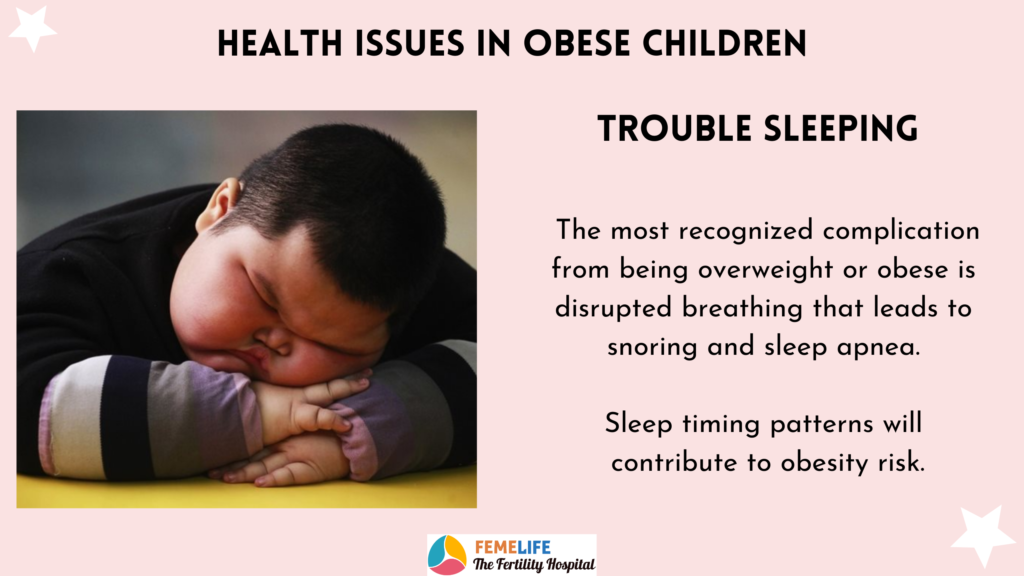
Sleep Apnea
Obesity and being overweight are both significant risk factors for obstructive sleep apnea (OSA). Obese children with sleep apnea may have neurocognitive impairments and excessive daytime sleepiness.
Obesity hypoventilation syndrome, which is associated with a high mortality rate, may be a long-term consequence of sleep apnea. Obese children with this syndrome require aggressive therapy. Obesity management, such as increased physical activity and a healthy diet, as well as surgical techniques, are indicated for OSA treatment.