
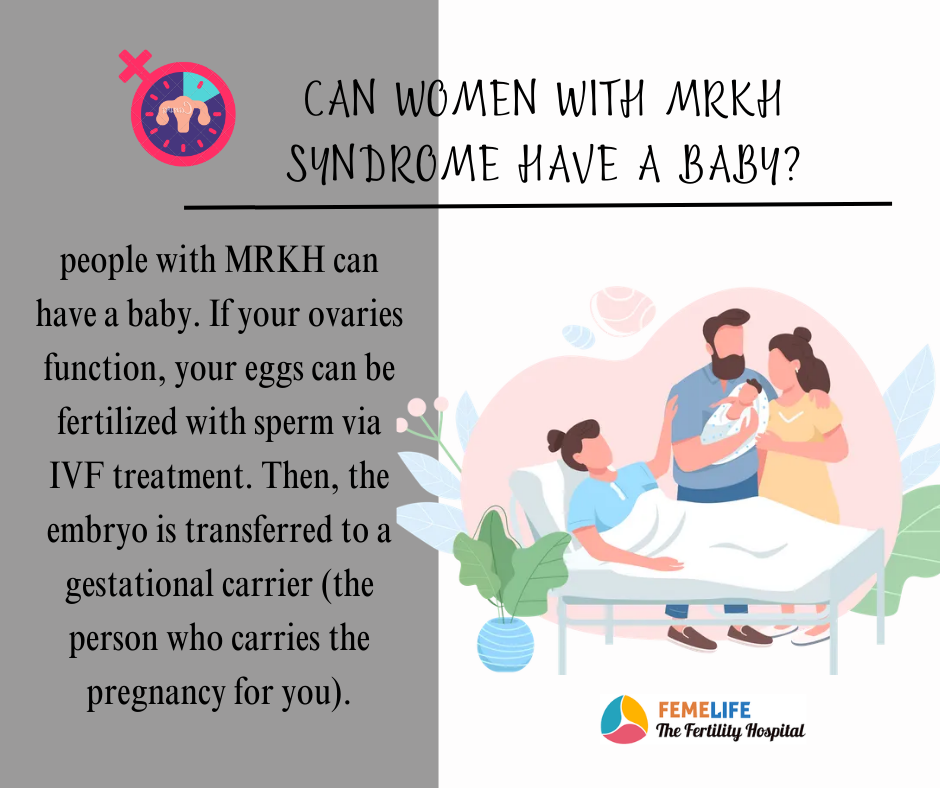
Can women with MRKH syndrome have a baby?
People with MRKH can have children. If your ovaries operate normally, your eggs can be fertilised with sperm through IVF. The embryo is then transferred to a gestational carrier (the person who will carry your pregnancy for you).
What are the health complications of MRKH syndrome?
People with type 2 MRKH syndrome may have problems with their kidneys, spine, or heart. Other health issues that are typical in patients with type 2 MRKH syndrome include:
- Problems with the vertebrae.
- Scoliosis.
- Renal irregularities include renal fusion and renal agenesis (the absence of one or both kidneys).
- Risk of kidney stones, urinary tract infections, and urethral blockages increases.
- Hearing impairment.
- Heart issues.
People with MRKH frequently experience reproductive health issues. In addition to being unable to carry a pregnancy or have a biological child, those with an undeveloped uterus might develop illnesses such as endometriosis.