
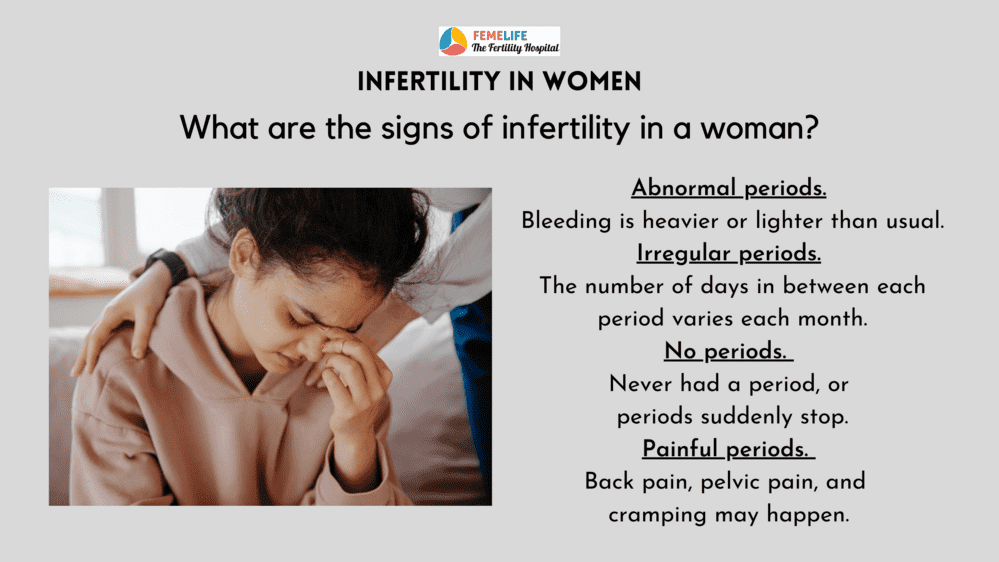
Common Signs of Infertility in Women and man
Irregular periods
The average woman’s cycle lasts 28 days. However, anything within a few days of that is normal, as long as the cycles are continuous. A woman who has a 33-day cycle one month, a 31-day cycle the next, and a 35-day cycle the following month is most likely having “normal” periods.
A woman with irregular periods has cycles that vary so much that she can’t even guess when her period will arrive. This could be due to hormonal imbalances or polycystic ovarian syndrome (PCOS). Both of these can lead to infertility.
Painful or heavy periods
Most women have cramps throughout their periods. However, painful periods that interfere with your daily life could be a sign of endometriosis.
No periods
It’s usual for women to have a bad month every now and again. Stress or strenuous exercise can cause your menstruation to disappear momentarily. However, if you haven’t had a period in months, you should have your fertility evaluated.
Symptoms of hormone fluctuations
- Skin issues
- Reduced sex drive
- Facial hair growth
- Thinning hair
- Weight gain
Common Signs of Infertility in Men
Changes in sexual desire
The health of a man’s hormones is also linked to his fertility. Changes in virility, which are frequently influenced by hormones, may suggest fertility problems.
Testicle pain or swelling
There are numerous disorders that can cause pain or swelling in the testicles, many of which might contribute to infertility.
Problems maintaining erection
The capacity of a guy to keep an erection is frequently tied to his hormone levels. Reduced hormone levels may follow, which could lead to difficulties conceiving.
Issues with ejaculation
Similarly, failure to ejaculate indicates that it is time to see a doctor.
Small, firm testicles
Because the testes are where a man’s sperm is stored, testicle health is critical to male fertility. Small or hard testicles may suggest potential problems that should be investigated by a medical professional.