
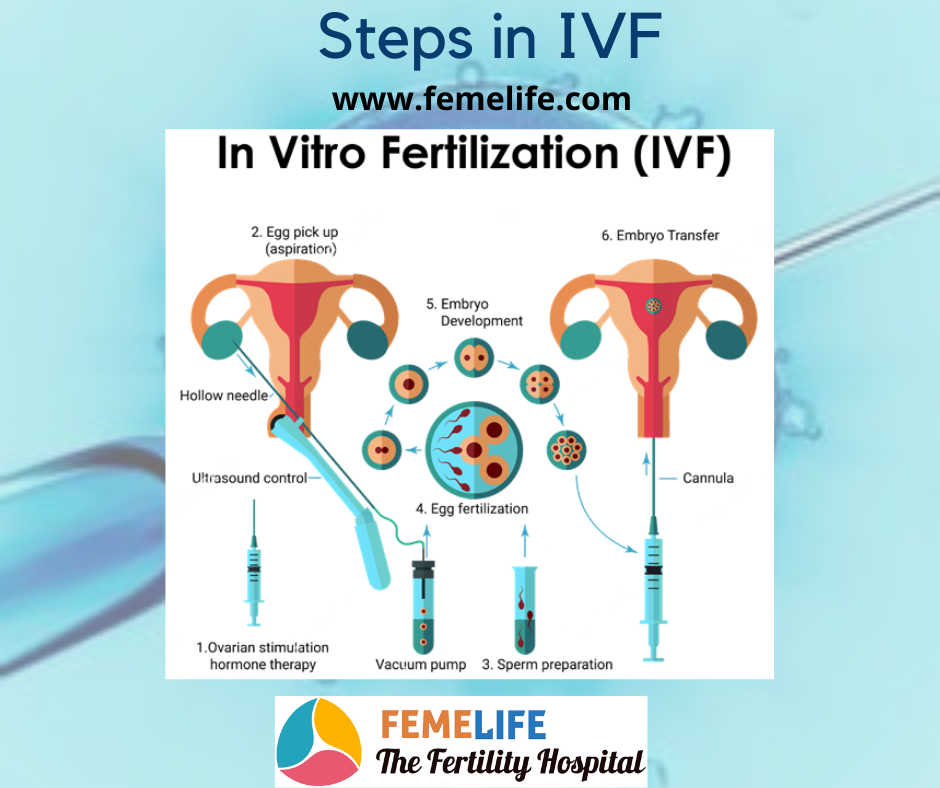
Step 1: Control Ovarian Hyperstimulation (COH)
COH is performed using many procedures. The most popular is a GnRH Antagonist regimen, which suppresses gonadotropin hormone release to prevent premature ovulation.
Follicular development is monitored via ultrasound imaging and hormone tests. HCG treatment completes the final maturation of eggs once the lead follicles have attained the necessary size. The egg retrieval procedure is scheduled 34-36 hours following the HCG injection.
Step 2: Egg Retrieval
The egg retrieval procedure is carried out in a surgical suite under intravenous sedation. Trans-vaginal ultrasonography is used to guide the aspiration of ovarian follicles with a needle.
The embryologist scans follicular fluids to find all accessible eggs. The eggs are cultured in an incubator in specific medium until insemination.
Step 3: Fertilization and Embryo Culture
Fertility is determined 16 to 18 hours following insemination with ICSI. Zygotes are fertilized eggs that are cultivated in a specially developed culture medium that promotes their growth. They will be evaluated on the second and third days following retrieval.
There are various advantages to blastocyst cultivation. Because embryos at this stage have a better chance of implantation, fewer embryos can be transplanted on day 5 to limit the possibility of multiple pregnancies.
Step 4: Embryo Quality
Several factors are utilized to determine the quality of the embryo. This is extremely essential when it comes to deciding which embryos to transfer. The embryos are assessed and photographed by the embryologist early in the morning on the day of your transfer.
Step 5: Embryo Transfer
Embryos are transferred on day 3 when they reach the cleavage stage (6 – 8 cells) or on day 5 when they reach the blastocyst stage. Embryo transfer is a straightforward process that does not necessitate the use of anesthesia. Under ultrasound supervision, embryos are put into a soft catheter and implanted in the uterine cavity through the cervix.