
What are the complication of childhood obesity?
There are many complications like physical complications. Childhood obesity often causes complications in child physical, social and emotional well-being.
Type 2 diabetes:
This chronic obesity condition affects the way the child’s body uses sugar (glucose). More weight and sedentary lifestyle increase the risk of type 2 diabetes.
High cholesterol and high blood pressure:
A poor diet can also cause the child to develop one or both of these conditions. These factors can contribute to the formation of plaques in the arteries, which can cause arteries to narrow and harden, possibly leading to a heart attack or stroke later in life.
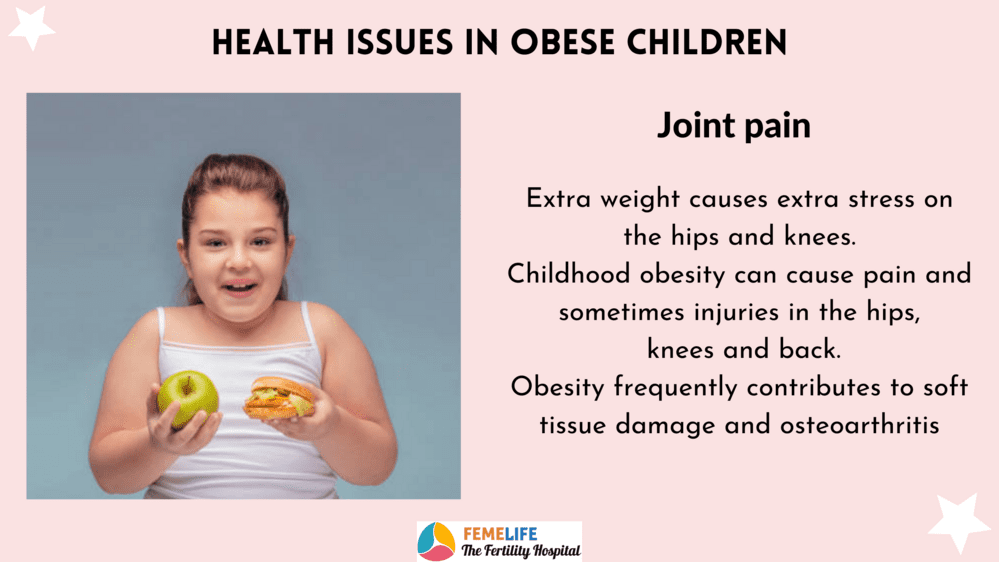
Joint pain:
Extra weight makes your knees and hips carry extra stress. Subsequently obese children can have pain and sometimes injuries in the hips, knees and back.
Breathing problems:
Asthma commonly happens in children who are overweight. These children are also more likely to develop obstructive sleep apnea, a potentially serious disorder in which a child can repeatedly stop and start during sleep. Where asthma is a chronic inflammation of the lungs airway. Obesity is the most common comorbidity with asthma here obesity is also a risk factor for more severe asthma in some but not all, people with obesity.
Nonalcoholic fatty liver disease (NAFLD):
This disease which usually causes no symptoms causes fatty deposits to build up in the liver. NAFLD can also cause scarring and liver damage.
Sleep disorder:
Kids and teen age people who are having obesity may also suffer from sleep disorders, such as excessive snoring and sleep apnea. Extra weight in the neck area can also block their airways.
Social and emotional complications:
Children who have more weight may experience teasing or bullying by their peers. This can result in a loss of self-esteem and increased risk of depression and anxiety.