Age: The ability to cope with extreme heat depends on the strength of central nervous system. In very young, the central nervous system is not fully developed, and in adults over 65, the central nervous system begins deteriorate, which makes the body less able to cope with changes in body temperature. Both age groups mostly have difficulty remaining for hydrated, which also increases risk.
Exertion in hot weather: military training and participating in sports, such as football or long distance running event, in hot weather are among the situations that can lead to heatstroke.
Sudden exposure to hot weather: more susceptible to heat related illness if you are exposed to sudden increase in temperature, such as during an early summer heat wave or travel to a hotter climate.
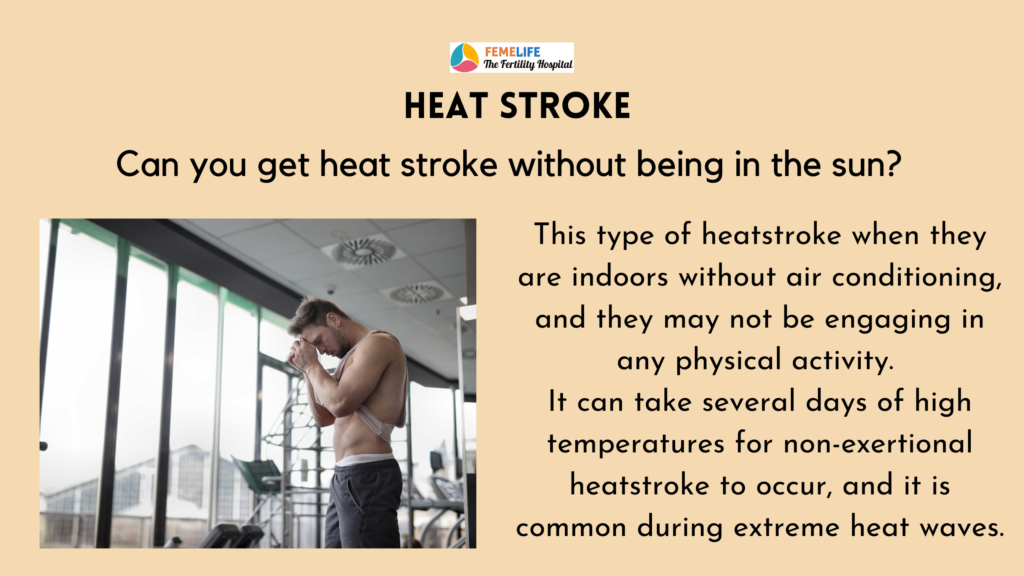
A lack of air conditioning: fans may make you feel better, during sustained hot weather, air conditioning is the most effective way to cool down and lower humidity.
Certain medications: some medicines affect the body’s ability to stay hydrated and respond to heat. Be especially careful in hot weather if you take narrow blood vessel, regulate blood pressure, rid the body of sodium and water, and reduce psychiatric symptoms.
Certain health conditions: certain chronic illnesses, such as heart, lung disease, might increase the risk of heatstroke. So can being an overweight, being sedentary and having a history of previous heatstroke will increase the risk