
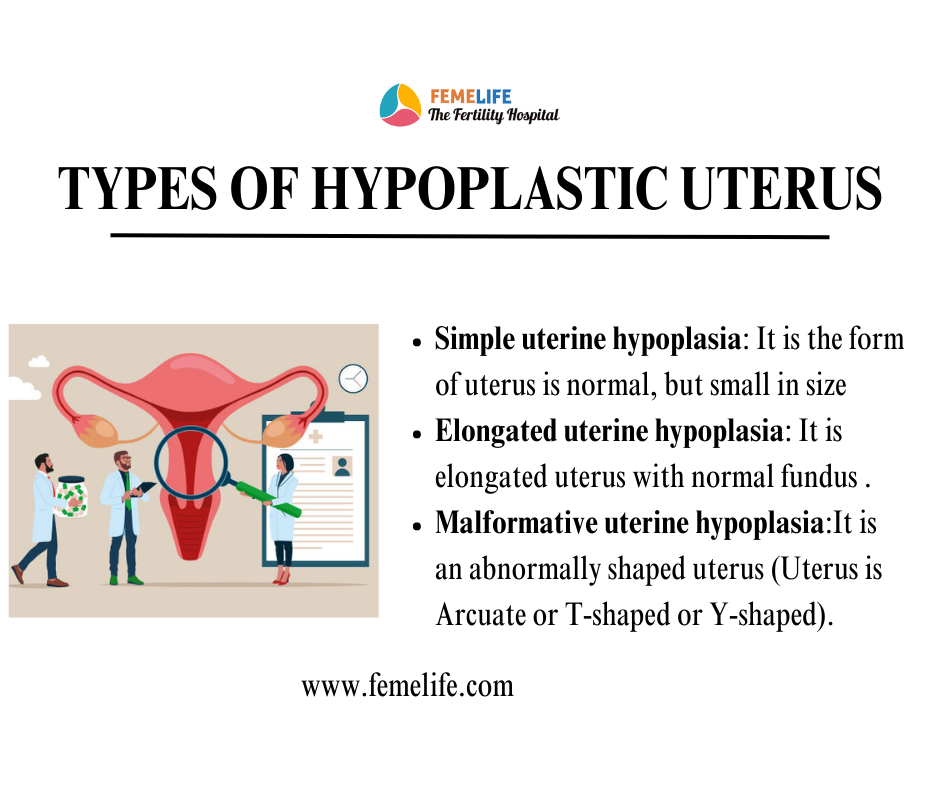
Types Of Hypolastic Uterus
Simple hypoplasia:
Form of the uterus is normal, but is small in size.
Elongated hypoplasia:
Fundus is normal, but the length is normal or more than normal.
Malformative hypoplasia:
Uterus is arcuate or T- or Y-shaped.
Hypoplastic Uterus Treatment
- Hormonal medications: In addition to oestrogen and progesterone, clomiphene citrate, letrozole, and gonadotropins may be administered to increase endometrial growth and regulate menstrual cycles.
- Intrauterine insemination (IUI): This method involves inserting sperm directly into the uterus during ovulation in order to maximise the likelihood of fertilization.
- In vitro fertilization (IVF): IVF is a more advanced fertility treatment that involves fertilizing eggs outside of the body and transferring them into the uterus.
- Surrogacy: Women with severe hypoplastic uterus may choose surrogacy, which is implanting an embryo generated with their own or donated eggs and sperm into a surrogate’s uterus.
- Uterine reconstruction surgery: In cases of second-degree hypoplasia, surgical techniques such as metroplasty or uterine septum excision may be used to restructure and enlarge the uterus.
- Psychological counselling: Because of infertility or pregnancy loss, women with hypoplastic uteri may feel emotional pain, and counselling or support groups may be therapeutic.