
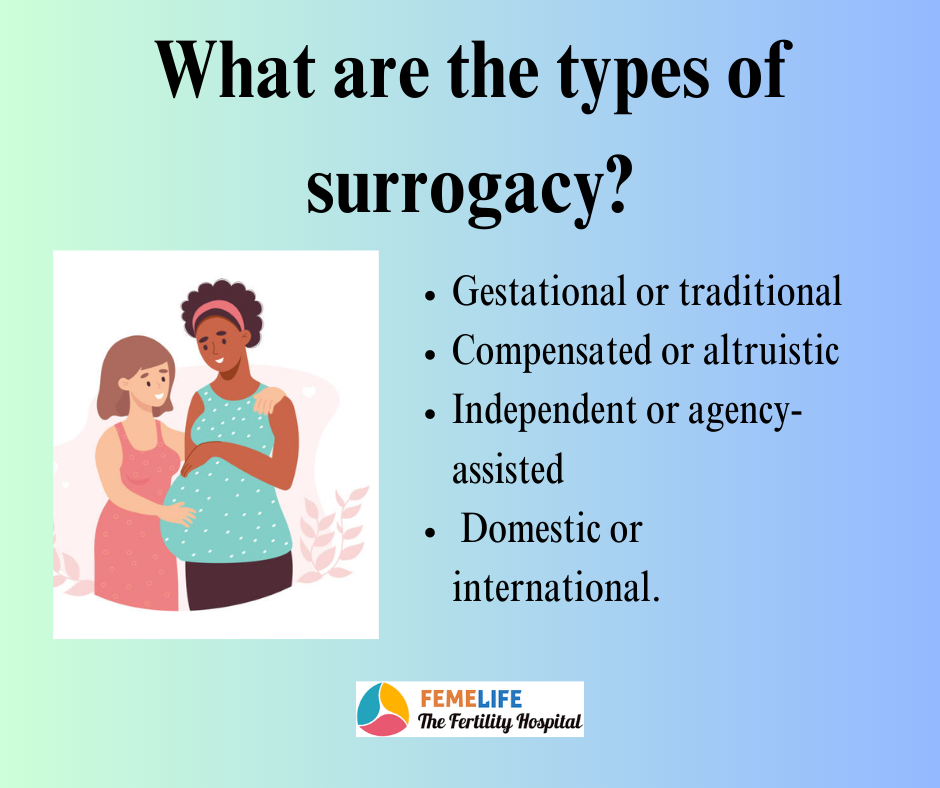
Traditional Surrogacy:
A traditional surrogacy (also known as partial, natural, or straight surrogacy) is one where the surrogate’s egg is fertilized by the intended father’s or a donor’s sperm.
Gestational surrogacy:
Gestational surrogacy was first achieved in April 1986. It takes place when an embryo created by in vitro fertilization (IVF) technology is implanted in a surrogate, occasionally called as gestational carrier
Compensated or Altruistic Surrogacy:
The surrogate mother receives remuneration for the pregnancy as well as reimbursement for her medical expenditures and any pregnancy-related costs such as travel, clothing, and any other expenses. The surrogate receives no monetary reward for her pregnancy in altruistic surrogacy.
Independent or agency assisted surrogacy:
Independent surrogacy may be intriguing to intended parents looking for a more cost-effective solution. It provides intended parents with greater control over the surrogacy procedure. While dealing with a surrogacy firm can be extremely beneficial, many intended parents want to have more control over the surrogacy process.
Domestic or International surrogacy:
The most significant distinction between international and domestic surrogacy will be the distance involved. Communication will be more difficult with international surrogacy, and you will not be able to play as active a role in your surrogacy procedure if it takes place abroad.