
What are the types of umbilical cord blood banking I can do?
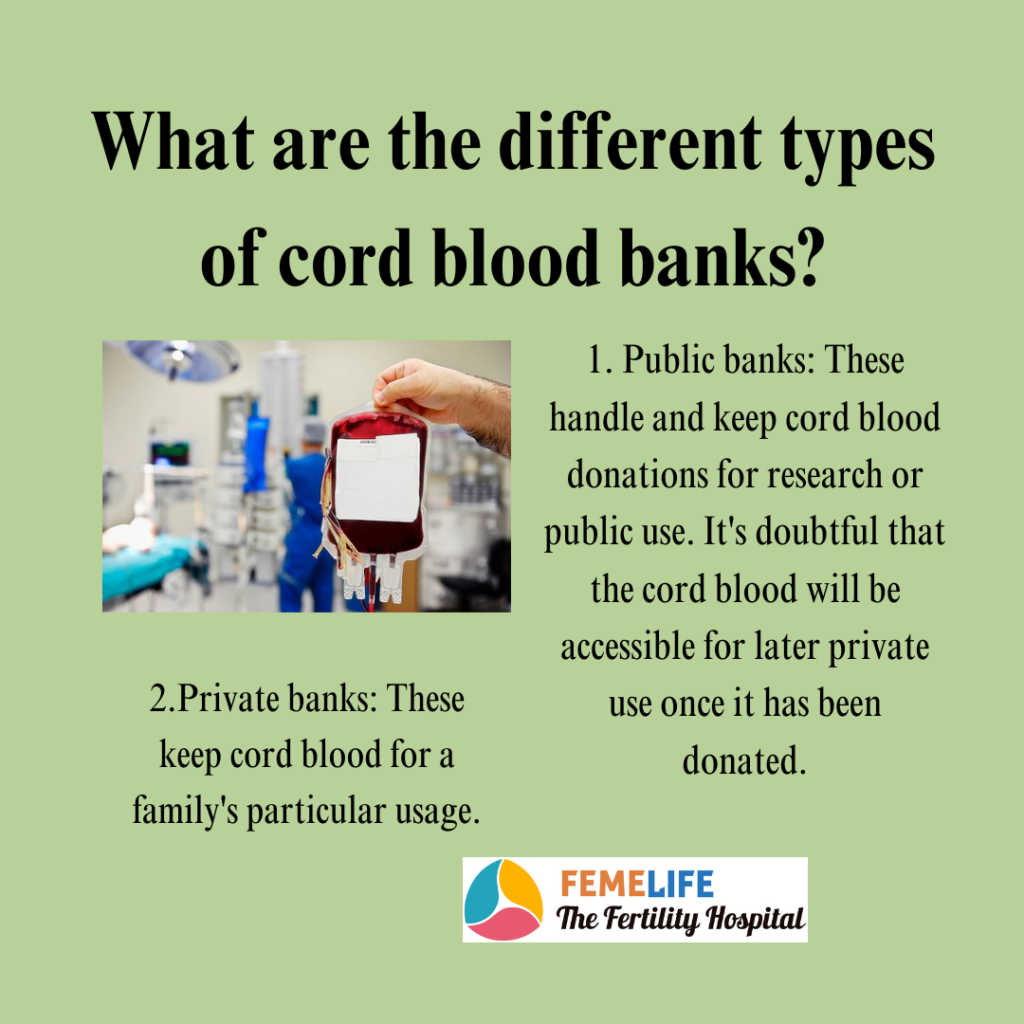
Cord blood banks are classified into two types: public cord blood banks and private (or family) cord blood banks. They differ in several ways.
Public cord blood banking
Consider public cord blood banks to be huge donation centres. You’re donating your baby’s cord blood so that it can help save the life of someone else.
Some details about public cord blood banks include:
- If your hospital is trained to collect cord blood and collaborates with a public cord blood bank, it is free.
- Cord blood is donated to those in need or used in medical research.
- All public cord blood banks are regulated by the Food and Drug Administration (FDA) to guarantee that they are collected and maintained in accordance with specified safety guidelines.
- It’s completely anonymous. Nobody knows the cord blood came from your child.
- There are eligibility requirements, so not everyone can donate.
Private cord blood banking
Your baby’s cord blood can be stored in a private blood bank. This assures that it can only be used by your family. Private blood banks can aid families that have a history of health problems that can be treated with stem cells.
Other details about public cord blood banks include:
- Your cord blood is yours. It is only available to your family. The likelihood of having to use cord blood is extremely minimal. In fact, your child is unlikely to be able to use their own cord blood.
- Private cord blood banks are not regulated by the FDA.