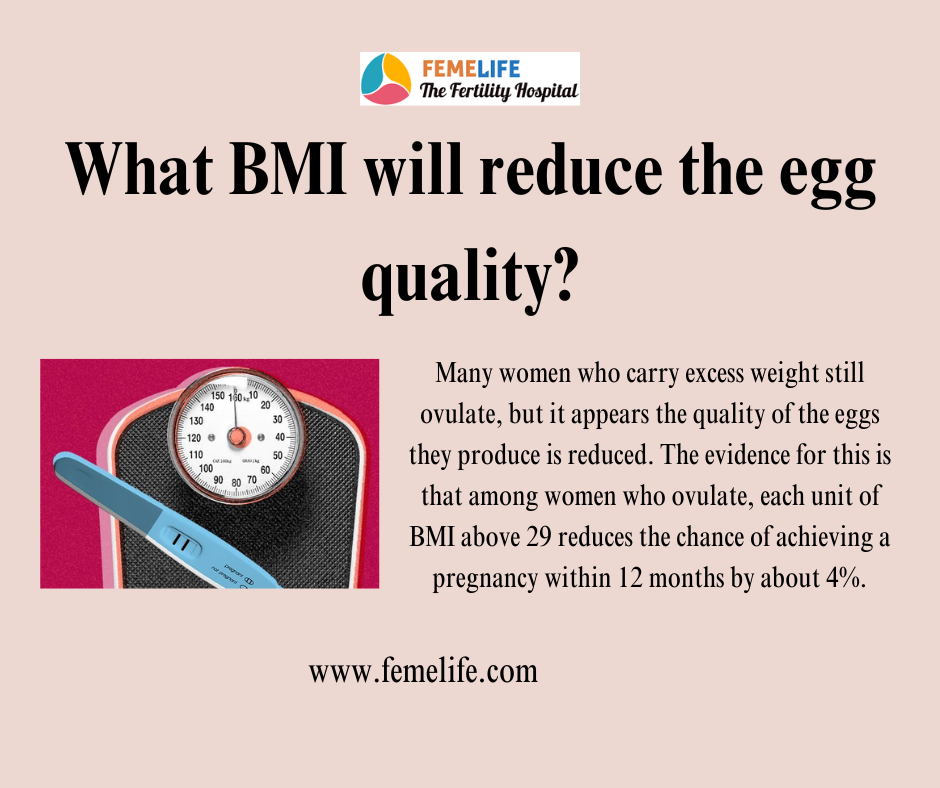
Many obese women continue to ovulate, but the quality of the eggs they produce appears to be compromised. The research suggests that among ovulating women, each unit of BMI above 29 reduces the likelihood of achieving a pregnancy within 12 months by roughly 4%.
Improve egg quality with these 7 tips:
Eat healthy
Healthy diets boost general health, which includes assisting your eggs in remaining healthy and of high quality, as well as improving overall fertility. Consume an abundance of leafy greens, whole grains, lean meats, nuts, fresh veggies, and fruits. Avoid trans fats, refined carbohydrates, processed foods or meats, and excessive salt and sugar.
Achieve a normal BMI (body mass index)
Obesity has been linked to decreased fertility and egg quality as a result of mitochondrial dysfunction and increased oxidative stress. Being overweight might also affect ovulation by altering hormonal balance.
To achieve pregnancy, a body mass index (BMI) of 18.5-24.9 is advised. To give you an idea of what that looks like, a 5’6″ lady has a normal BMI and a weight range of 115-154 pounds.
Boost blood flow
Oxygen-rich blood supply to the ovaries promotes egg health. Dehydration can cause a rapid decrease in blood flow, so aim to consume 64 oz.
Manage stress
Stress can cause the release of hormones like as cortisol and prolactin, which can disrupt or stop ovulation and so reduce egg production. Activities that reduce stress and frustration, such as yoga, meditation, exercise, or a warm bath, can help.