
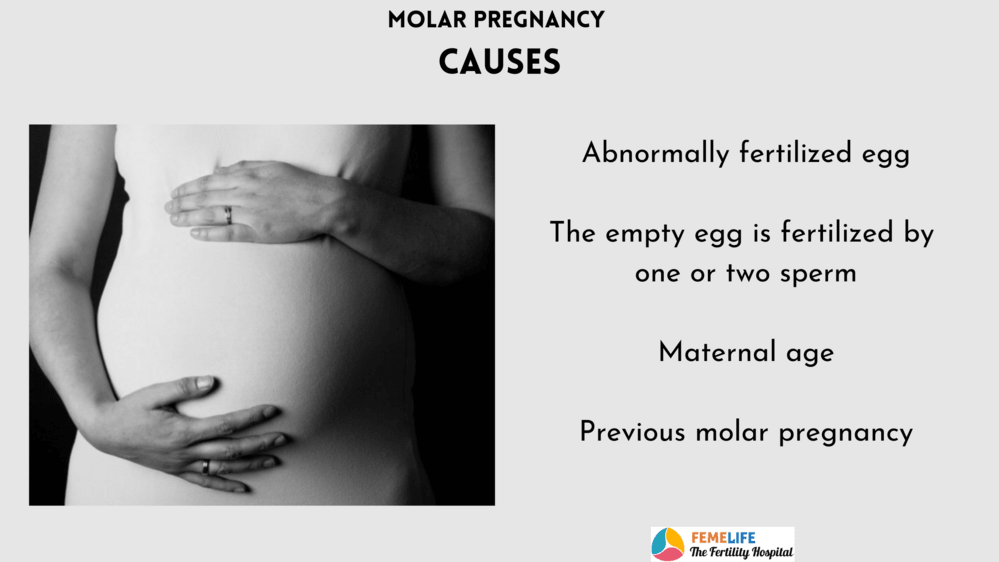
What causes a molar pregnancy?
- Genetic mistakes that take place during the fertilization of an egg by a sperm are the root cause of molar pregnancies.
- An embryo receives one set of 23 chromosomes from each parent throughout a typical pregnancy, giving the embryo a total of 46 chromosomes. Genes are located in structures called chromosomes. Your body is programmed by your genes.
-
The chromosomes are out of balance in molar pregnancies. No chromosomes are present in the egg during a whole molar pregnancy. The sperm provides 23 chromosomes to the embryo. Two sperm fertilise an egg in a partial molar pregnancy. The embryo as a result has 69 chromosomes.
-
This genetic mistake results in an unviable pregnancy.
Can molar pregnancy be prevented?
It is impossible to stop a molar pregnancy. Avoiding another pregnancy for up to a year after your original molar pregnancy will lower your risk of difficulties if you’ve had a molar pregnancy. Find out from your obstetrician when you can start trying to conceive.
Does a molar pregnancy cause infertility?
It doesn’t lead to infertility, no. However, you should wait up to three months before trying to conceive. Your HCG levels can rise to their pre-pregnancy levels as a result. Find out from your obstetrician when you can start trying for a second pregnancy.