
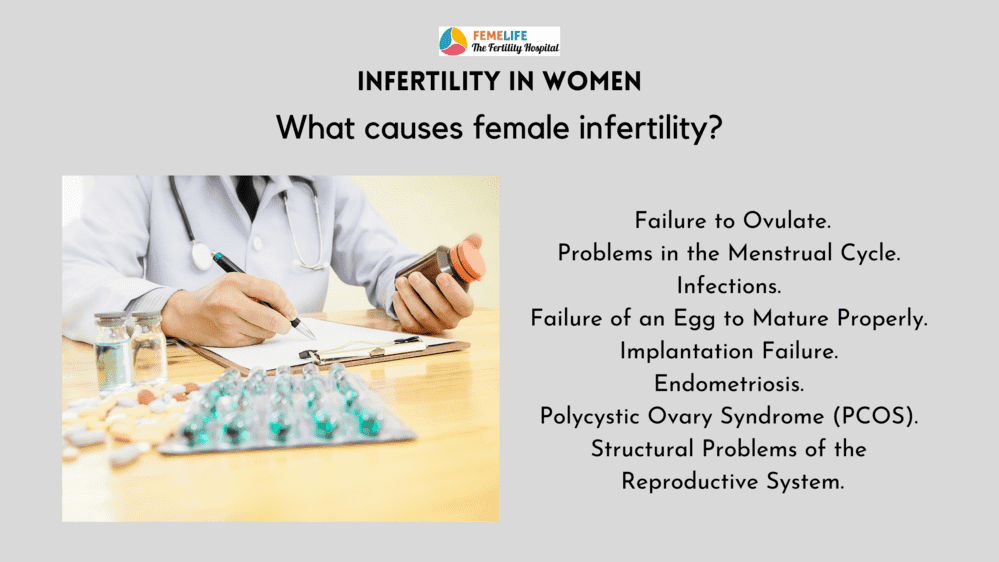
What causes infertility in women?
When a woman doesn’t ovulate during a menstrual cycle, it’s called anovulation. Potential causes of anovulation include the following
- Polycystic ovary syndrome (PCOS): PCOS is a condition that causes women to not ovulate, or to ovulate irregularly. Some women with PCOS have elevated levels of testosterone, which can cause acne and excess hair growth. PCOS is the most common cause of female infertility.
- Diminished ovarian reserve (DOR): Women are born with all of the eggs that they will ever have, and a woman’s egg count decreases over time. Diminished ovarian reserve is a condition in which there are fewer eggs remaining in the ovaries than normal. The number of eggs a woman has declines naturally as a woman ages. It may also occur due to congenital, medical, surgical, or unexplained causes. Women with diminished ovarian reserve may be able to conceive naturally, but will produce fewer eggs in response to fertility treatments.
- Functional hypothalamic amenorrhea (FHA): FHA is a condition caused by excessive exercise, stress, or low body weight. It is sometimes associated with eating disorders such as anorexia.
- Premature ovarian insufficiency (POI): POI, sometimes referred to as premature menopause, occurs when a woman’s ovaries fail before she is 40 years of age. Although certain exposures, such as chemotherapy or pelvic radiation therapy, and certain medical conditions may cause POI, the cause is often unexplained. About 5% to10% of women with POI conceive naturally and have a normal pregnancy.
- Menopause: Menopause is an age-appropriate decline in ovarian function that usually occurs around age 50. By definition, a woman in menopause has not had a period in one year. She may experience hot flashes, mood changes, difficulty sleeping, and other symptoms as well.