
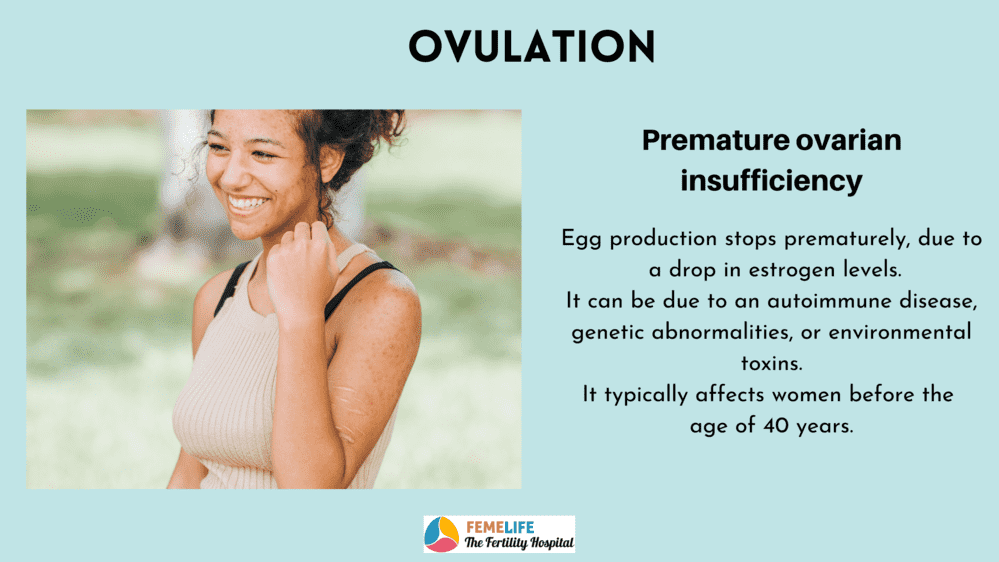
What is premature ovarian insufficiency?
When a woman’s ovaries stop working before age 40, she has premature ovarian insufficiency (POI). This is premature ovarian failure (POF) also, known as premature menopause. It is a common condition, affecting 1–2% of women younger than 40 years of age.
It occurs among 0.1% of younger women less than 30 years of age. When this happens, a woman’s menstrual cycles become irregular and stop. Her ovaries stop making hormones such as estrogen and progesterone. Moreover, she stops releasing eggs (ovulating) regularly or at all.
Predisposing Factors of Premature ovarian failure:
- Women receiving cyclophosphamide for either kidney diseases or rheumatoid arthritis are at risk of developing POF.
- Malnutrition and cigarette smoking are perhaps the only consistent environmental features of earlier menopause.
- The first known significant cause is damage to the ovaries, such as that caused by chemotherapy or radiotherapy or pelvic surgery. Extensive pelvic surgery may lead to ovarian failure. Surgical menopause follows removal of ovaries. Similarly, hysterectomy to remove the uterus also leads to an earlier menopause.
- Premature ovarian failure (POF), at times is an autoimmune endocrine disease. Autoantibodies and lymphocyte subset changes are common with premature ovarian failure. This problem can run in family as well.
Treatment of premature ovarian failure
- Changes in Lifestyle and Premature Ovarian Failure
- Premature ovarian failure may need ovarian transplantation.
- Premature ovarian failure management for infertility