
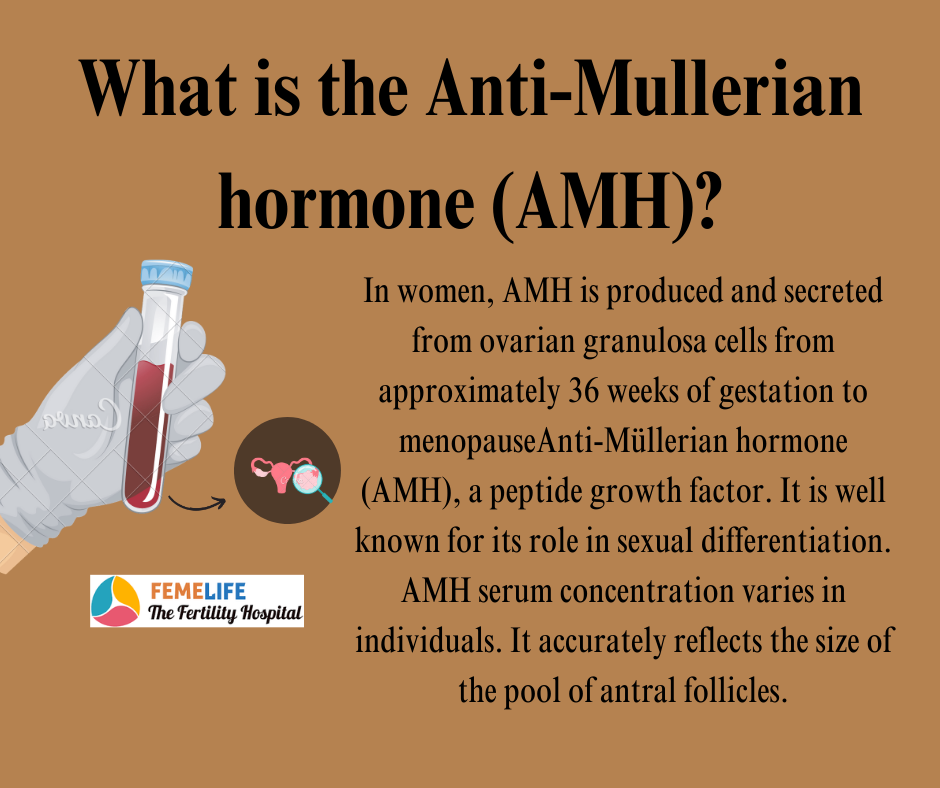
What is the Anti-Müllerian hormone (AMH)?
In women, AMH is produced and secreted from ovarian granulosa cells from approximately 36 weeks of gestation to menopause
Anti-Müllerian hormone (AMH), a peptide growth factor. It is well known for its role in sexual differentiation. In men, AMH is secreted from the testes. It promotes the male type of development in the unborn baby (fetus). Without AMH, the male baby may develop uterus, part of the vagina, and fallopian tubes.
There is minimal AMH found in the female fetus. Males express AMH earlier and at significantly higher concentrations. After the birth level of AMH declines in the male baby as the testosterone hormone increases. AMH test is used to detect abnormalities of male development.
In females, AMH levels increase after birth. It is exclusively produced by granulosa cells of ovarian follicles. After an initial increase until early adulthood, AMH concentrations slowly decrease. It becomes undetectable at menopause. It indicates the exhaustion of stock of primordial follicles. AMH serum concentration varies in individuals. It accurately reflects the size of the pool of antral follicles. Also, it represents the quantity of the remaining follicles.
Why the AMH test is done?
- As a test of ovarian reserve
- As a marker for predicting age at menopause
- As a predictive marker of ovarian response in controlled ovarian stimulation
- AMH levels may vary significantly in women of the same chronological age, allowing AMH to predict the remaining length of a woman’s reproductive lifespan.
- Assessment of ovarian function before and after gynaecologic surgeries or toxic agents such as chemotherapy