
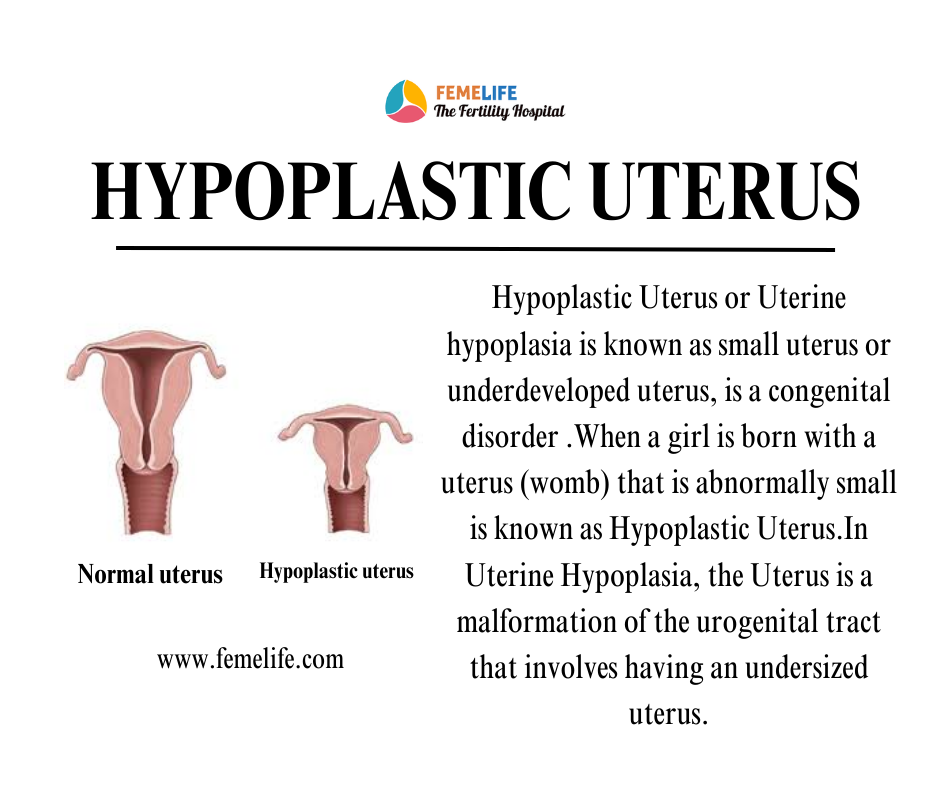
What Is Uterine Hypoplasia?
Uterine hypoplasia is a condition that impairs the reproductive health of women. It is distinguished by an abnormally small or underdeveloped uterus, which can result in a variety of disorders such as menstruation abnormalities, reproductive challenges, and pregnancy difficulties. It can be caused by genetic defects, hormone imbalances, or exposure to specific poisons. Imaging tests are used to provide a diagnosis, and treatment options differ based on the circumstance.
Hypoplastic Uterus Degrees and Their Characteristics
The hypoplastic uterus is divided into three degrees based on the degree of uterine underdevelopment. The degrees and their features are as follows:
First Degree Hypoplasia:
Although the uterus is tiny, it maintains its typical form and structure. Women with first-degree hypoplasia may have monthly abnormalities or infertility, but the disorder is frequently misdiagnosed until they seek medical attention for these difficulties.
Second Degree Hypoplasia:
The uterus is substantially smaller than usual and may be shaped abnormally. Women with second-degree hypoplasia may have more severe menstrual irregularities, reproductive problems, and a higher chance of miscarriage or premature birth.
Third Degree Hypoplasia:
Women with third-degree hypoplasia are unable to conceive naturally because their uterus is either exceedingly tiny or nonexistent. They may also have other linked reproductive tract defects, such as a cervix or vaginal absence.
It’s crucial to remember that the severity of symptoms and accompanying problems can vary even within each degree of hypoplasia, and treatment options might vary appropriately.