
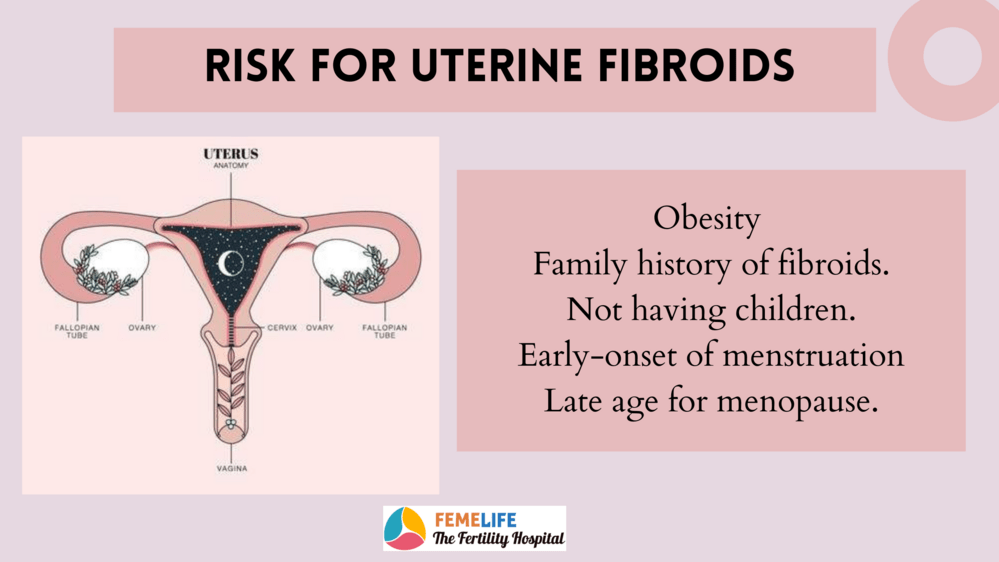
Who is at risk for uterine fibroids?
Your likelihood of having fibroids may be influenced by a number of risk factors. These may consist of:
- Obesity and a higher body weight than what is deemed healthy for you (more than 20% over).
- Family history of fibroids.
- Not having children.
- Menopause at a late age.
Where do fibroids grow?
Fibroids can develop in a number of locations both inside and outside of your uterus.
Your treatment depends on the size and location of your fibroids.
The size and number of your fibroids will determine which sort of treatment will be most effective for you and whether treatment is even required because they are growing.
Specific locations where you can have uterine fibroids include:
- Submucosal fibroids: In the cavity of the uterus, where a baby develops during pregnancy, fibroids are expanding. Imagine the growths descending into the uterus’s centre, where there is currently an empty space.
- Intramural fibroids: These fibroids are actually a part of the uterus’s wall. Within this muscular wall, the fibroids are expanding.
- Subserosal fibroids: These fibroids are attached closely to the exterior wall of the uterus and are situated on the outside of the uterus this time.
- Pedunculated fibroids: Additionally, fibroids can be found outside the uterus. On the other hand, pedunculated fibroids have a short stem that connects them to the uterus.